EVERYBODY WANTS TO BE A SHOWGIRL UNTIL YOU HAVE TO KNOW HER NAME
By: Aquarius Moon
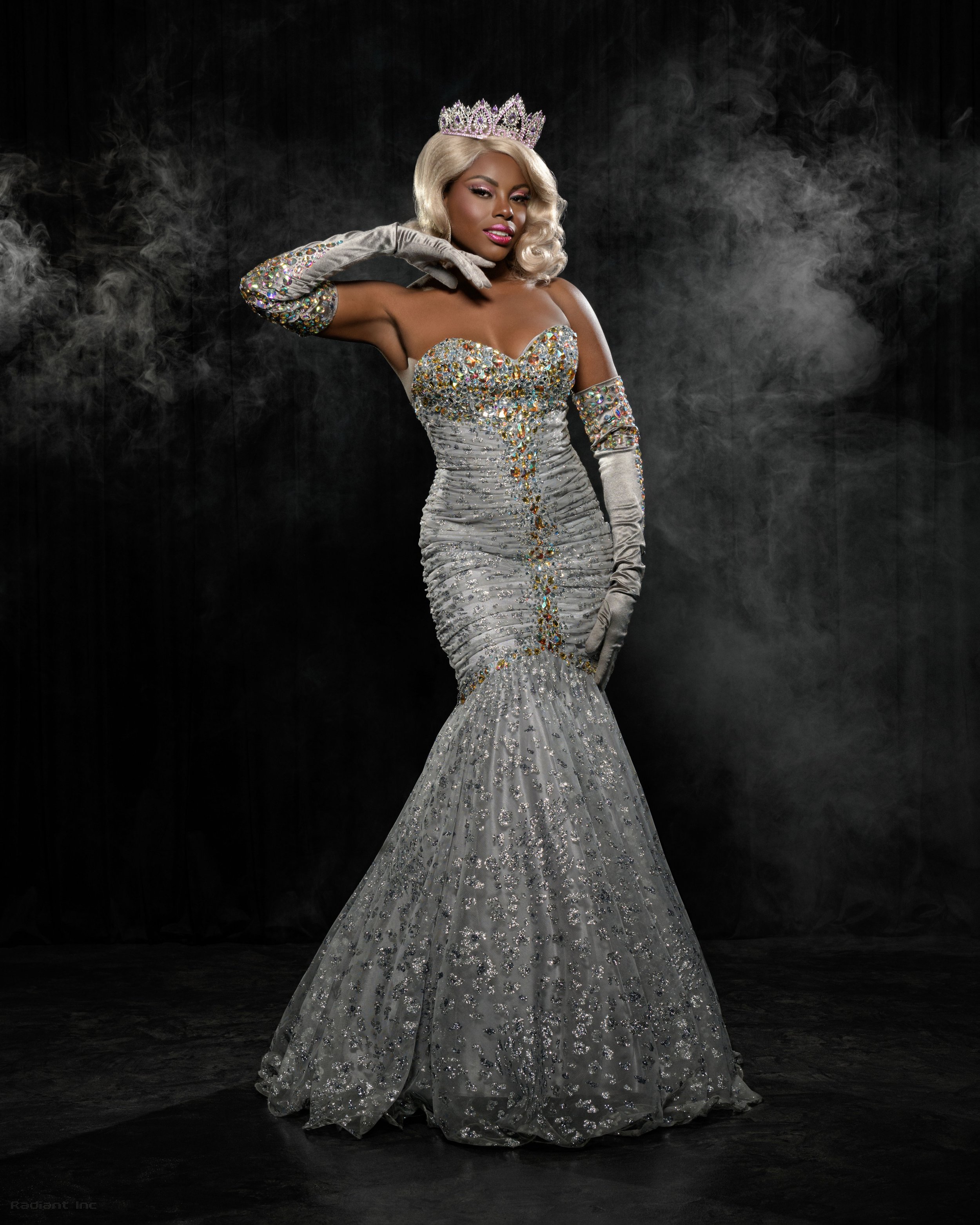
Photography by Radiant Inc.
Sunday morning I was on a train in Lausanne, Switzerland — exhausted, still gleaming from the culmination of three weeks overseas — when I caught the end of the Burlesque Hall of Fame's Tournament of Tease livestream. The signal kept cutting out, but by the grace of RedBone and the powers that be, I managed to see the crowning of our new Queen of burlesque live.
Unfortunately for the other passengers on that train, I screamed!
I had been watching names I recognized come across the screen all night — performers I have followed, shared stages with, and admired from across timelines and time zones. And then came our new Miss Exotic World 2026, Reigning Queen of Burlesque: Gin Minsky.
A Brooklyn native who has been tapping since the age of five, Gin is the kind of performer who makes you excited for the ride. Classically trained in jazz, ballet, and tap, and one of fewer than a hundred women in the world trained in the ancient art of sword swallowing — a skill she learned from a Coney Island sideshow legend — she has spent fifteen-plus years working every cabaret, vaudeville house, and burlesque stage in New York City. Carnegie Hall. Lincoln Center. The Philadelphia Museum of Art. This was a moment for the circus artists, the trained dancers, and for everyone who has been quietly doing the work.
The rest of the night was just as iconic. Chola Magnolia— queer Chicanx performer and 2020 Noire Pageant Queen — took first runner-up. A woman who has been consistently bringing culturally informed performances to stages since 2008 and who carries Perle Noire's legacy directly in her work and her crown.
Peekaboo Pointe took Most Classic and second runner-up — a twenty-plus year Brooklyn veteran, nine BHoF appearances, an MFA in Performance and Interactive Media Art, proud sex worker, and one of the most influential artists in this industry. She is the creator of Tales From the Strip (@talesfromthestriplive) — a platform built specifically to give performers the space to tell their own stories, in their own words, on their own terms.
Charlie Quinn Starlingwon both Best Debut and Most Innovative — two titles in one night, with a fabulous act built around our favorite pink pearl. MochaMocha2.0 won Best Debut Runner-Up — a Chicago performer and founder of Body Confidence for Queens, a body-positive burlesque dance company she built from the ground up, debuting to a sold-out audience in 2021. Her work is also preserved in the digital archive of the Every(Body) Wants to Be a Showgirlexhibit — meaning her legacy is already documented as part of the living history of Black burlesque. Seattle diamond Valerie Veils took Most Dazzling and Australia’s cheeky Hot Blonde Slvt took Most Comedic. The theme of the night, across every winner, was consistency, professionalism, and joy!
And then there were Miss Angie Zand Aria Delanoche, who took Best Small Group, with a sing-and-strip that honestly deserves its own theater residency. This kind of masterclass performance reminds you of what this art form is capable of when talent and skill show up in the same room at the same time.
The Rhinettestook Best Large Group. A Denver-based ensemble led by Miss Monroe— reigning Queen of Alamo City Tease and someone building something real and lasting in Denver's burlesque scene — I headlined their show this past year and watched them work up close. What I saw was a team that shows up fully, takes care of each other, and comes to class when Black burlesque performers are in town….I knew this group was special.
I watched all of this through a glitching stream on my phone from four thousand miles away and got chills watching Gin. Her ten thousand hours were clearly on display — through movement, breath, and a skill set that takes years to refine. The sacrifice and the dedication. Just goals, all around.
Congratulations to everyone who performed and produced this weekend. Book these people. Pay them their rate. There is something to learn from every single person on that stage — regardless of what night you perform, where you come from, and how you interpret burlesque.
Also for those of you who didn't get to watch live, the Burlesque Hall of Fame replay is available.
The Crown is a door, not a wand
If you ever win a crown, the first thing you might think is: so what now? There is no curriculum for navigating life after you win a crown. I have not found a course on how to operate at this level. A title — or two — that holds real weight comes with a learning curve, and that education happens in real time. In real rooms. Alongside real legends. On stage live. I feel like a beginner again — under intense scrutiny, failing forward, and learning more about myself with every show.
Twirlisha Devine, the first winner of What The Funk Festival and producer of Legends and Icons says, “Competing and winning crowns does not make you a great performer. There are plenty of incredible performers who choose not to compete that have huge impacts on the culture and history of burlesque. Competitions and crowns are not the only factors that make a performer relevant culturally or historically.” Josephine nor Sally had any crowns.
I know this truth because I am living it. The crowns I wear as Sin City Queen of Burlesque and Monarch of Imperial Burlesque enhanced my ability to pursue a lifelong dream to travel overseas. For the last few weeks I have been in Europe — to Aversa, Italy with Madame Flo (who is a fairy everyone should have the honor of meeting), and to Lausanne, where I had the honor of performing alongside burlesque icons: Inga did her winning 2018 Miss Exotic World stocking act, Foxy Lexxi Brown recieved a standing ovation for her Queendom act that won the 2025 BHoF first runner-up award. My life is better after watching UK darling Demi Noire perform live and the rest of the undeniable Misty Lotus' Burlesque Extravaganza cast at Club Chauderon. Misty is a fantastic producer, an incredible community builder and a powerful performer. Her show was one of the most impactful shows I have ever witnessed.
Also on that stage was the fabulous Lusanne star The Ursula Flavor, and my new favorite multi-MC Vicomte Harbourg. A room full of artists who treat this art form as high culture.
But sharing the stage with these superstars was only part of it. The offstage moments always impact me the most. Breaking bread with people of this caliber. Going through Misty's home library. Talking about the performers who came before us — who sacrificed, who fought, who built the infrastructure so we can now perform and provide pathways to financial stability.
That is what a crown gives you access to, if you are willing to receive it. The crown is a doorway. Step through it and you get access to lineage, knowledge, and responsibility. A crown is not a wand. You are entitled to nothing. You can use the crown to advocate for your value. You don't need a crown but it can give you a platform in today’s burlesque zeitgeist. As Foxy Lexxi put it perfectly: "When you are so talented, you have to be seen, because someone has to see you on that stage."
So back to the moment at hand — I want to offer a different conversation while we are all debating if we need to go back to burlesque school or not. Every large theatre show we have in this industry is an opportunity to legitimize ourselves. We can use these moments to call each other in without the weight of shame and the violent behavior of cancel culture.
Happy Pride! Happy Juneteenth month!
We are living inside a political moment where the bodies of queer people, trans people, women, and people of color are under active legislative assault. And inside our own community — an art form literally built on the liberation of the body and the examination of gender and femininity — we are still policing who belongs on the stage based on a crown, a list, or a following count.
That is not the move. The new generation is not a monolith. I promise a lot of the newbies do care about their history. If you don't know that's ok but if you are chronically online I do wonder if there are better ways to spend your time. As an industry, we have to be able to have conversations about progress that are informed by history.
Go get a drink babe. This is going to be a long one.
The Pandemic Generation and What We Owe Each Other
I need to root this conversation in a fact: a significant portion of the most visible performers in burlesque right now — myself included — belong to what I call the “youtube” pandemic generation. Regardless of age, I am referring to a group of people who used online resources, isolation time, and social media to position themselves as working burlesque artists. Regardless of whether you debuted right before the pandemic, during or after - if you debuted within the last decade of burlesque this is the group I am referring to.
When the world shut down, a wave of seasoned performers stepped back. Some retired. Some pivoted. Some were pushed out. And a new class of artists came in — many of whom benefited from learning this art form through a digital lens and riding the algorithm. YouTube tutorials, online workshops, Instagram lives, loaded with free information previously gatekept behind paywalls and higher thresholds of accessibility.
Then when the world reopened, this group (filled with extremely talented and loving artists) hit the festival circuit and, in some cases, achieved in three or four years what used to take a decade or more. Opportunities that performers in previous generations fought lifetimes for became available to us faster than anyone had ever seen.
If you were not tech-savvy or active on social media, you were at a serious disadvantage. The industry adapted, and those who did not adapt were largely left behind. That acceleration has been a gift for many of us. Burlesque has changed my life and provided opportunities to travel all over the world. But this rapid growth comes with a responsibility that some of us have not fully recognized. At the same time erasure is happening too often and too easily.
Summer Walker and What We Actually Owe Donna Touch
In case you missed it — every(BODY) wants to be a showgirl*. Most recently, Summer Walker's team commissioned Donna Touch to create the fans used in her current arena tour. People online are living for the burlesque aesthetic being brought to a mainstream stage (again) especially because Summer expressed her love for Black burlesque during the visual rollout.
I will use this moment to tell you something about Donna — the woman who made my jumbo fans (which have won me two crowns and opened doors I could not have imagined).
When I first saw Summer performing with fans on that tour, my reactions cycled through quickly: cute, then mildly annoyed, reflective, then frustrated. After some time and a very necessary spa day, I came back to what actually went right. I presume her team hired a burlesque designer along with the various artists - professionally trained dancers, pole, fire, and an entire crew of artists on another successful international music tour. She compensated them. She is now providing a platform for these artists to be seen at mass scale. But where was the burlesque booking? The booking was in the design.
Last year, I watched Donna donate a pair of fans while performing at the Juneteenth Jumpoff last year. I have heard the stories of how she mentors performers in her personal time, teaching a specialized trade that can genuinely transform the financial stability of working artists. Donna Touch is a master craftsperson, a performer, a mother, a business owner, and one of the most quietly powerful forces in this industry. She has funded apprenticeships out of her own pocket to train the next generation of BIPOC performers in industry-competitive skills — fan making, craftsmanship, stagecraft — investments that will outlast any single crown or viral moment.
But the real point is not just Donna. It is bigger than any one person.
This industry is not just built of performers. Behind every show there are designers, photographers, graphic artists,lighting technicians, stage managers, security staff, seamstresses, collaborators, and the friends and family who hold space to make the dream possible. There is an entire ecosystem of labor that makes any of this possible — and the more we recognize and compensate those people, the more sustainable, professional, and commercially viable this industry becomes.
The pathway to mainstream legitimacy runs directly through how we treat everyone in the room — not just the ones in the spotlight.
When an arena full of people watches a performance built on burlesque aesthetics — feather fans, chorus lines, striptease vocabulary — and yet those at the base of this art form are still fighting for basic respect, the issue is not who borrowed the look. The issue is that we keep sitting back while the aesthetic gets paraded to the mainstream as a costume, while our entire infrastructure remains invisible.
We ourselves consume the craft without studying the craftsperson. We buy the fans and miss the hand that made it. And we miss the reason why we need to constantly ask: who did this before me?
The People We're Not Talking About
We love our legends. We should. Toni Elling. Lottie the Body. Josephine Baker. These names deserve reverence, always. But reverence for the past cannot come at the expense of the living.
I often think about why we share black-and-white photographs of burlesque stars at a higher frequency as images of people who are working right now. Sometimes nostalgia becomes a way of erasing the present. The internet is a large place and people can engage how they want but there is an obvious pattern emerging.
Framing history as something you either know or don't — as a test of worthiness — is an elitist, gatekeeping mindset. Information is not equally accessible. We should never shame someone for not knowing something. What we should do is create more generous, more fruitful conversations about how those before us navigated impossible circumstances, so that we can learn, evolve, and build better lives for ourselves and each other.
There is no blame in not knowing. When you choose willful ignorance as a tool for self promotion that's when we miss the plot. When you care more about the crown than the legends and legacy that created the competition WE HAVE A PROBLEM.
As I develop the next installation of Every(Body) Wants to Be a Showgirl, we are going to be presenting deep-dive installations on three Black legends every performer should know.
Shawna the Black Venus — born Darryl Board, from Kaneohe, Hawaii — started her burlesque career in 1972 on a dare at an amateur night contest. She won fifty dollars and was offered a job on the spot. She performed for eighteen years, became a recognized BHoF Living Legend, was featured in Legends of Burlesque: Then and Now, and has continued to headline festivals well into recent years. She is currently battling cancer. This woman paved a road that many of us are walking on right now. She deserves more than a mention — she deserves our active support and our flowers while she is here to receive them. You can learn more about Shawna in Indianapolis later this summer….be sure to be following @twirlishadevineproductions to hear what we have coming up!
Tina Pratt — born in Pittsburgh in 1935 — began dancing at age three and became the first African American student at the Mamie Barth Dance Academy at six. She entered burlesque in the 1950s and performed through the early 1970s on the segregated Chitlin' Circuit, touring the US, Canada, Amsterdam, Germany, and Switzerland. She headlined at legendary drag cabarets like the Jewel Box and the Pearl Box Revue. She made her Broadway debut at age fifty-three. We just watched her walk across the BHoF stage. Every burlesque performer in this industry should know exactly who she is and what she endured to keep performing at a time when the world was actively working to make her invisible.
Tanqueray — Stephanie Johnson — whose memoir, documented by Brandon Stanton of Humans of New York, became a New York Times bestseller. A Black woman who broke into New York clubs that had never seen a Black dancer, who thrived financially doing exactly what we do in the 1970s, who wrote a column for a national magazine, and who built a life of radical empowerment in the middle of systemic violence and racism. That is not a footnote. That is the foundation.
Writer’s Note: I want to applaud Charlie for how they honored those who helped them along the way. Charlie Quinn Starling — this weekend's Best Debut winner — who credited Julie Atlas Muzas a foundational influence on their career. Julie has and still is paving the way for burlesque performers to evolve beyond what we think is possible. My first time watching Julie perform at the New York Burlesque Festival in 2023 changed the way I view bravery on stage. She is audacity embodied in a bubble.
Also! Did you know multiple nights a week Charlie is the green fairy at Absinthe? We have burlesque performers on salary. Do you know they have a Black fairy now!? We are making motion today but you have to look in all different spaces and places. If you want to learn about burlesque you have to be open minded. We have all types of bodies performing in all types of places from bar show to casino residencies.
Performers like Mayvin Misbehavin and Raquel Reed are people this entire industry needs to know — not because of what they look like or how they identify, but because profound is profound! They take no shortcuts. They have put in the work. We as the new wave need to take the time to learn, listen and honor while we still have the opportunity.
Perle Noire Walked So We Could Run
A living legend. A Black burlesque icon. The woman who won Best Debut at BHoF in 2008 and then walked away from the Miss Exotic World crown entirely — choosing to build her legacy on her own terms. The founder of the Noire Pageant, the first burlesque pageant exclusively showcasing performers of color, which she created through years of single-handed determination, fundraising, and refusal to wait for permission. A true cultural architect.
Perle Noire is someone whose example gave me — and many of us — confidence in spaces that were not built for us. In hostile working environments where I could not always express the full range of who I am as a performer, watching what she had built and how she carried herself reminded me that Blackness, femininity, and power could occupy the same stage without apology or compromise. I have studied her videos. I have listened to her lectures. I have watched every interview and have referenced her fan work in my own practice countless times. There is no Aquarius Moon without Perle Noire. I am also grateful to Poison Ivory for the mentorship and honesty she has given me as I navigate this industry.
When Gin Minsky accepted her Miss Exotic World crown and cited Perle Noire as her greatest influence, that lineage worked exactly as it should. You know who came before you. You say their name when you win.
And then there is my first burlesque mentor — Egypt Blaque Knyle. Afro-Latina. Raised in South Central Los Angeles. A professional dancer since age four. Former Disney performer — principal dancer in the Chocolate Nutcracker and a cast member of The Lion King. Holder of over forty burlesque titles, noted by many as the most in the history of this art form. Ranked among the top twenty most influential performers in the world. Founder of the House of Knyle mentorship program — a living, growing lineage of performers she has guided, shaped, and championed. Egypt gave me my "Golden Goddess of Burlesque" title, and what that means to me goes far beyond a crown. It means I am part of a documented legacy of Black excellence in this art form.
Right now I am building the House of Knyle flowchart — a visual map of Egypt's influence: including but certainly not limited to Cleopantha, Twirlisha Devine, Simone Del Mar, and Nox Falls and the performers whose careers trace back to her mentorship. When it is complete, it will be one of the clearest illustrations of how Black burlesque legacy actually moves through generations. Watch for it.
We cannot forget about the contributions of Black burlesque builders like Jeez Loueez and Jeezy’s Juke Joint. Familiarize yourself with how your favorites got their first start. Many of them happened at a Jeez Loueez function. Learn about iconic producers like RedBone, Lakota Shekar, Venessa Chevelleand Foxy Tann. Go online and watch them perform but learn about how they provide opportunities for artists out of their own pocket. Self funded burlesque productions. We have the power!
Real preservation is a living practice. It means honoring people while they are here, giving flowers while they can still smell them, and connecting the past to the present in ways that are explicit, continuous, and actionable.
The People We Keep Erasing
We live in a world where marginalized identity does not automatically produce wisdom about how we treat each other within our own communities — and the sooner we talk about this honestly, the healthier this industry becomes. I am inspired to speak up from Holly’s Good “unpopular posts” that are incredibly educational takes on how the burlesque industry can grow.
Beyond the performers of a pre-pandemic time, let’s talk about AMAB performers — assigned male at birth. This is a group that ranks in the top for me as some of the most influential people who have shaped my career. They have provided education, financial opportunities, and wisdom. My ballroom fathers are everything. Father Marquis Clanton, who brought voguing to the Paris circuit, taught me how to dance in heels. King Kory Kruze is an influential Baltimore performance artist who taught me how to vogue femme and he’s also my hairstylist.
These Black men are some of my greatest mirrors. They really showed me unconditional love and never teased me or made me feel bad about exploring myself, my sexuality and my feminine power. They advocate for women and femmes when the weight of patriarchy gets heavy. And they rarely get their flowers.
I would also like to take a moment to highlight some AMAB burlesque influencers you should know:
Derek Brown— DC-based choreographer, director, and producer with over twenty years in live entertainment. Credits include BET, NBC, FOX, VH1, and Disney. Faculty at Joy of Motion Dance Center. Creator and Artistic Director of SIR — an all-male burlesque brunch show at SAX Lounge in downtown DC, built specifically to center the pleasure and empowerment of women and queer audiences. A space where, as Derek has said, people could come to "cut loose, feel empowered, feel sexual, and be in a safe environment." Derek Brown is also the person who first introduced me to the world of burlesque. I would not be standing where I stand without what he opened in me.
Ray Gunn— Chicago. 2013 BHoF King of Burlesque. Stage Door Johnnies. Trained in contemporary dance, acrobatics, capoeira, and pole. Internationally touring headliner, educator, and one of the architects of boylesque as we know it today.
Samson Night— 2023 Miss Exotic World. A cross-genre artist with over twenty-five years of professional experience across TV, film, Broadway, voiceover, commercials, and print. Currently performing on Broadway and at Carnegie Hall. A theater educator. A person whose artistry crosses every line this industry tries to draw.
P. NoNoire— 2022 BHoF Best Boylesque winner, and a performer who instilled real confidence in me during a chapter of my career when I needed it most. When I was selected to headline at Viva Las Vegas as Eartha Kitt alongside an incredible lineup of superstars — I understood what it means to have your presence in a room validated by someone whose credibility precedes them.
Faggedy Randy— Chicago. 2023 BHoF 2nd Runner Up and Most Comedic. Mr. Hollywood Burlesque 2023. Top 50 Most Influential in 2024. A performer whose humor and commitment to making burlesque more fun needs to be understood.
Together, Samson Night, P. NoNoire, and Faggedy Randy form BAWDY SUIT— a production trio whose collective impact on boylesque and on the broader burlesque ecosystem deserves far more recognition than it receives. Check out their upcoming show Juneteenth Jumpoff and even if you can't show up in person purchase a ticket and sponsor someone to see the show.
The Chocolate Showboy— born in Detroit, trained from age thirteen, currently a leading man at the Moulin Rouge in Paris. Read that again. A Black man from Detroit is performing at the most famous cabaret in the world. Forever iconic.
Brian Scott Bagley — a new community partner on the Every(Body) Wants to Be a Showgirl exhibit, and the man who runs the Musée Joséphine Baker et des Afro-Descendants de Paris. Brian is a Baltimore native, Parisian showman, choreographer, historian, and the first Black MC of the Crazy Horse de Paris since its founding in 1951. He established the museum in 2020 with the approval and blessing of the Bouillon-Baker family. It is the first museum in Paris dedicated to Josephine Baker and Afro-Descendants histories in France.
You are not obligated to know these people but you would greatly benefit from knowing about Matt Finish, Jet Noire, Tigger, Mr. Gorgeous and many, many more.
Do you know about Tré Da Marc? A Minneapolis icon. International boylesque sensation. 2020 Noire Pageant King of Burlesque. BHoF competitor. Top 50 Most Influential 2020–2022. Advisory Board member for my exhibit. In the industry since 2013. And right now, producing one of the most important shows in burlesque this month is the Juneteenth Jubilee.
I sat down with Tré and asked him where the industry is failing. On who has impacted him the most, Tre says “Ray and Luminous Pariah were major influences on me. They inspired me to be the type of performer that can be in both my femme and masc energy while still honoring the femmes who have paved the way for me to take up space in this artform. They motivated me to become comfortable exploring my unique masculine and feminine traits.”
More wise words from the Noire King of Burlesque, "I think it's failing the people that look at burlesque as a business. There are hobbyists who do it for fun in and out, but there are a lot more people that make burlesque their livelihood. We're spending so much more money investing in ourselves and our art than we could ever get back. We have to legitimize ourselves as creative workers in this economy. If we have to participate in late-stage capitalism, we are really failing working artists, independent contractors, freelancers, and sole proprietors who are just trying to sustain themselves."
And when I asked him what makes the Juneteenth Jubilee irreplaceable:
"Watching people feel like they've been seen — whether it's Black femme, Black trans, Black queer, Black male, biracial — there's a ton of opportunities for people to feel like they're well represented. They have such an exciting, wonderful, joyful time in the Jubilee that I feel like it's just something that can't be replicated anywhere else."
If we want to talk about erasure, let's talk about how these people are providing working and financial opportunities for performers of all backgrounds to survive. Tre is a producer who understands this art form. With his own funds Tre is operating a budget well over $10,000. Where do you think this money will come from? Do you feel you are supporting queer Black people this month? Can you attend your local juneteenth show? Can you allow someone to do a takeover? Can you contribute to a Black headliner?
What can you do because many of us are uninterested in what can’t be done. We have a long few years ahead of us and I believe learning about those who came before you is a cheat code. If you don’t know about Tre follow them on social media and look out for his interview coming out this Friday.
Preservation Is Not a Hobby
If you actually care about burlesque history — not as a brand position, not as an aesthetic — then pay attention to the work being done right now to keep it alive.
Danielle Colby — known to many as Dannie Diesel, and to television audiences as a star of American Pickers — opened the Ecdysiast Arts Museum in Davenport, Iowa in June 2025. A one-of-a-kind institution behind a pink door in an 1895 building, dedicated to preserving the history and artistry of burlesque and adult performance. Rotating exhibits. Live performances. Educational programming. Costumes, photographs, artifacts, stories. Weekly food banks for the local community.This is what preservation looks like. This is how we maneuver through late stage capitalism. A room you can walk into where history is waiting for you and resources are made accessible.
On June 21st — Juneteenth — the Ecdysiast Arts Museum hosts Sable: A Juneteenth Cabaret, an all-Black production hosted and produced by Harlem Nyte. A night of burlesque, drag, incredible music, costumes, art, and museum displays featuring powerhouse performances that center Black femmes in a space specifically designed to honor them.
This is the intersection of preservation and celebration in real time. A museum founded to protect this history, hosting a show that proves it is still being made. Support the Ecdysiast Arts Museum. Show up for Sable. Show up for Harlem Nyte. Support the Ecdysiast Arts Museum.
What is Decorum?
I want to be transparent that everything I am about to say applies to me too. I am in this conversation, not above it. Feedback is essential when you want to be great. When people tell me to fix my face, not take myself too seriously, and lighten up I can either get extremely offended or listen with an open heart and a sound mind.
For all the babes like me that are still working to log their 10,000 hours - it is unacceptable to tear down a queen who just won a crown. This person is an industry professional who competed at the highest level and won. Weaponizing that moment to give a hot take online is embarrassing to the industry as a whole.
Being a titleholder at this level means eyes are on you constantly. More responsibility. More demands. More scrutiny. The platform that comes with a crown is an opportunity to model what this industry can be — for the people inside it and for everyone watching from the outside. And people are watching from the outside, I learned this the hard way.
Commercial agents, entertainment lawyers, casino producers, venue bookers — they are watching. What they see in moments like this is exactly why they hesitate. Our drama is our ceiling. Our unprofessionalism is the reason we keep getting passed over for the opportunities this art form has more than earned. We want legitimacy. We want scale. We want to be taken seriously by the mainstream. So you are free to your opinion and the first amendment is still there just realize reality…
Venus Cuffs— nightlife producer, corporate events booker, and consultant to celebrity teams on who to hire — is someone who has invested significantly in this industry and in me personally, being one of the first producers to book me in New York. She left a comment on my page recently that needs to be digested.
As someone who regularly consults on why producers and celebrity teams are leaving burlesque performers out — even famous ones — she said plainly: "We all need to have a much BIGGER conversation. An honest conversation about WHY producers and many of these celebrity teams are leaving burlesque performers out." She added that she pays performers at a higher rate than almost everyone else in NYC, has connected nightlife performers to press opportunities, and fully supports the community — but that honesty is required. She is willing to have that conversation. Are you?
We want legitimacy. We want scale. We want to be taken seriously by the mainstream. Then we spend a weekend tearing each other apart online over a crown.
I’m using this moment (if you made it this far) to acknowledge we can all do better. We can all learn something and take a few more minutes to read, talk, learn and meditate over this beautiful art we are all so enamored with.
Put Your Money Where Your Principles Are
Tré Da Marc is producing the Juneteenth Jubilee — a love letter to Black and brown bodies in burlesque, a show built from scratch out of love for community, not clout, by a man who has been doing this work since 2013.
He needs to raise $1,000 by this Friday.
Fifty dollars. That is what I am asking for if you have it and I fully understand the rising price of gas and basic necessities. If everyone contributed what they could to a Queer Black man (or any other Black burlesque producer providing work on a federal holiday to Black people) — we could change the trajectory of these productions by tomorrow.
This is what it looks like to put the history lesson into practice. You do not just know the names. You fund the work.
Please donate to Tre so they can bring Black burlesque to Minneapolis. Send a love donation here.
Share it. Tag it. Contribute what you can even if its a reshare. Before I head to Minneapolis I will be in St. Louis for Rose Whip Presents... The Hidden Door. I will be performing and teaching with some of the most fine and fabulous Black burlesque performers. If you are in Missouri come take Showgirl 101 class with me!
Resource share: If you would like resources about Decolonizing Neo Burlesque History you can purchase Bella Sin’s recording here.
One More Thing
Josephine Baker did not fit the mold. She pushed against every box they tried to put her in — the misogyny, the racism, the expectation that she should be grateful for whatever scraps a world that wanted her body but not her humanity was willing to offer. She became unforgettable anyway. Because the work was real. Because she understood that her body was a vessel for something larger than spectacle — it was a political act, a statement of freedom, a refusal to disappear.
We are the inheritors of that refusal.
Do the work. Know the names. Honor the living. Fund the artists.
Happy Pride.
— Aquarius Moon
Before you go:
Please send donations for Tré Juneteenth Jubilee HERE. Visit the Ecdysiast Arts Museum.