Everybody Wants to Be a Showgirl Until It’s Time to Credit the SourcE
Guest Author: Shay Au Lait
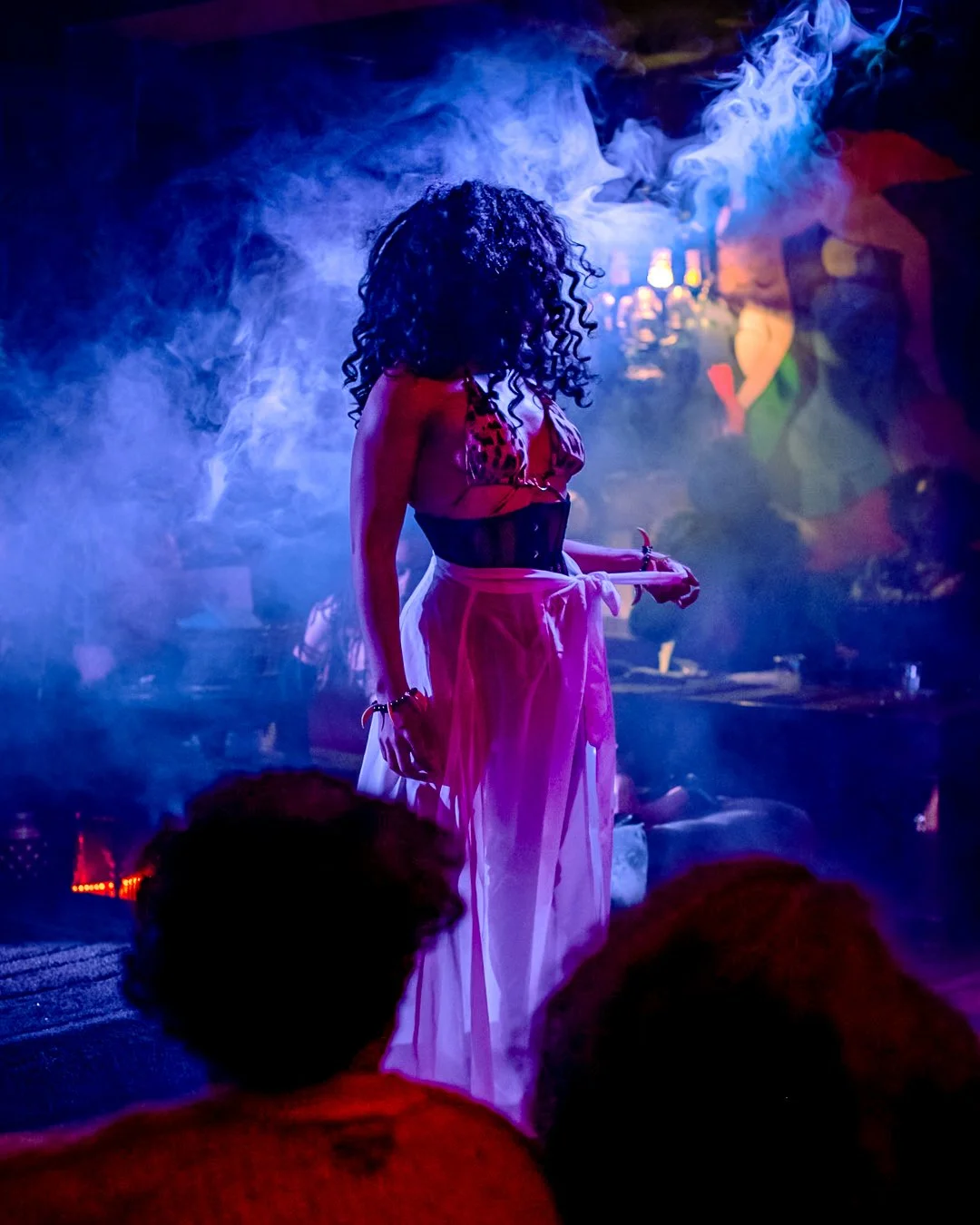
Photography Credit: Citizen Rob of Shay Au Lait at YUMMY by Siren Pack
Everybody wants to be a showgirl.
They want the feathers without the molting.
The corsets without the bruises.
The glamour without the lineage.
Burlesque aesthetics are everywhere - on runways, in music videos, across social media feeds, embedded into mainstream culture in ways that feel both inevitable and profitable. The look sells. The fantasy is consumable. The spectacle is desirable.
But desire without context is extraction.
Everybody wants to be a showgirl.
But ask them to name one.
The spectacle is everywhere.
The names are not.
This is how erasure works.
Bodies remembered. People forgotten.
Black burlesque is a living lineage built through movement, storytelling, costuming, labor, and community. Yet much of its history remains undocumented, under-credited, or scattered across disappearing websites, unarchived footage, and unnamed photographs.
And if we don’t preserve it intentionally, it doesn’t simply fade.
It gets taken.
Institutions take it.
Capitalism takes it.
Mainstream culture takes it.
Non-Black burlesque and nightlife take it.
It gets aestheticized.
It gets denied.
It gets starved.
It gets watered down.
So the real question isn’t whether people want to be showgirls.
The real questions are:
Who gets named?
Who gets credited?
Who gets funded?
Who gets remembered when the lights go out?
And where will our art be when we are gone?
Not the vibe.
Not the aesthetic.
The people.
The names.
The stories.
The labor.
The Moment the Internet Went Quiet
Photography Credit: Citizen Rob at YUMMY by Siren Pack
When I first became deeply curious about burlesque performance, I did what some people do: I went to Google. I wanted history. Context. Names. Frameworks. I wanted to understand what burlesque was, not just what it looked like.
What I found was thin.
There were SEO articles. Mood boards. Surface-level commentary. But very little organized, credited, Black-centered information that spoke to the scope of what I was searching for.
In 2018, I wrote an article called “The Best Burlesque Websites That Taught Me History, Culture, and Tips.” I was attempting to map my own personal burlesque study terrain.
In 2025, I went back to update and evergreen the article.
Many of those websites were gone.
Gone.
No longer published. No more live links. It was like walking past an empty lot where a building full of history once stood.
I didn’t delete the links of my article. I left them up and added notes directing readers to web archives.
“As of 2025, this website has been decommissioned. The link provided will take you to a web archive version of the home page from 2018.”
Something about that moment sat heavily in my body.
Sadness. Panic. Fear. Disappointment.
So many stories gone.
So many names gone.
So many resources gone.
Where would new artists go to learn?
What if I needed that information again?
Ten years after I die, I don’t want someone to have to use Web Archive to find my work. I don’t want our cultural record or my own digital legacy to feel like an archaeological dig.
I asked myself more questions.
What happens to our domains when we die?
What happens to our props, our costumes, our writing?
Who decides what’s worth saving?
If we are not intentional about documentation, our impact becomes rumor.
And rumor does not build legacy. It does not build wealth. It does not build infrastructure.
If Black burlesque is not intentionally documented, named, structured, and institutionally supported, it will be extracted, erased, and financially unsustainable for the very people who built it.
Preservation as Practice & Infrastructure
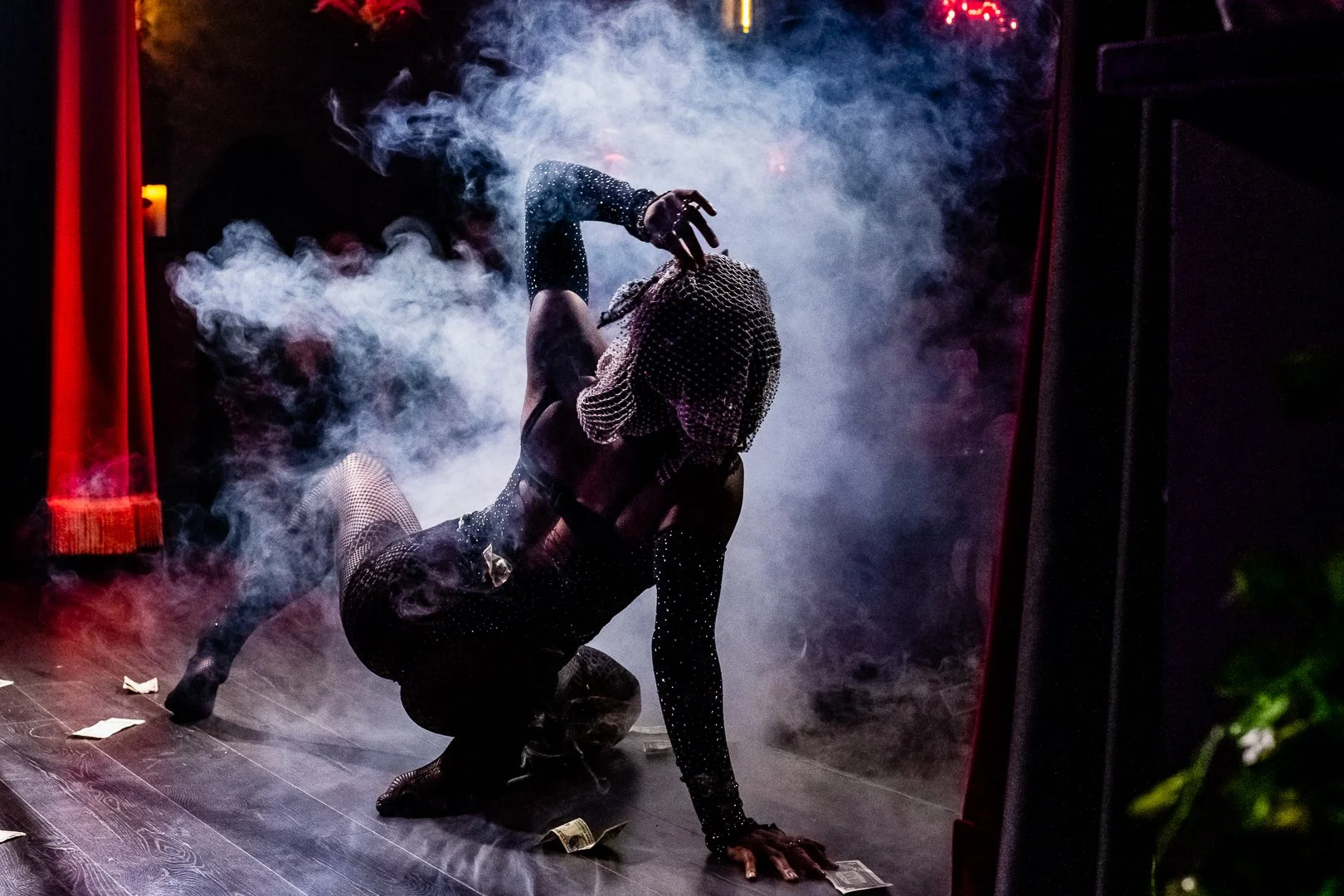
Photography Credit: Citizen Rob of ZamiFairy at interPOLE by Siren Pack
When people hear “preservation,” they often imagine archival garments locked behind plexiglass, frozen in time. That matters, but preservation doesn’t live only in objects. Preservation is a practice and an infrastructure built through documentation, naming, and continuity. It is not passive. It is something we maintain in real time.
Preserving burlesque means preserving:
costumes and props
photos, videos and films
names, credits, and context
websites, writings, and shared knowledge
producer notes, audition footage, curriculum, and syllabi
relationships, stories, and community memory
the conversations that never happen onstage, but shape everything that does
So many historical burlesque images, especially of Black performers, circulate without names attached. Bodies remembered. People erased.
Documentation without attribution is still erasure.
And preservation is not just cultural. It is economic.
If you are not documented, you are harder to book.
If you are not cited, you are harder to fund.
If you are not archived, you are harder to institutionalize.
If you are not institutionalized, you are harder to sustain.
By institutionalize, I mean embedding burlesque into the structures that preserve and fund culture - academia, museums, libraries, grants, policy, and advocacy. Not to make it elite, but to make it durable.
Preservation affects:
booking power
grant eligibility
licensing
speaking opportunities
academic citation
publishing
collaborations
retirement security
estate longevity
Black artists have poured thousands of hours, dollars, sweat, and blood into productions and performances - often self-funded, underpaid, and under-recognized - while living paycheck to paycheck, many without health insurance, and most without long-term financial stability.
Labor built an industry.
It did not build wealth.
Burlesque as a whole lacks institutional infrastructure. But what exists overwhelmingly favors thin, white, socially acceptable archetypes within this industry. Black burlesque operates with even less structural support.
If we are not documented, named, and structurally supported, we will be aesthetically celebrated and economically erased.
Naming Is a Spell
Naming is not administrative. It is ritual.
To name someone is to conjure them.
To credit someone is to protect them.
To document someone is to anchor them in time.
I have watched Black burlesque artists be erased in real time. Work attributed elsewhere. Concepts recycled without credit. Influence is acknowledged only after it has already circulated detached from its source.
I have felt invisible in my own field knowing that my work has directly shaped so many artists, venues, producers, audience members and more for over 20 years.
Naming is lineage. Naming is protection. Naming is future-making. That is why I build.
What I Built in Response
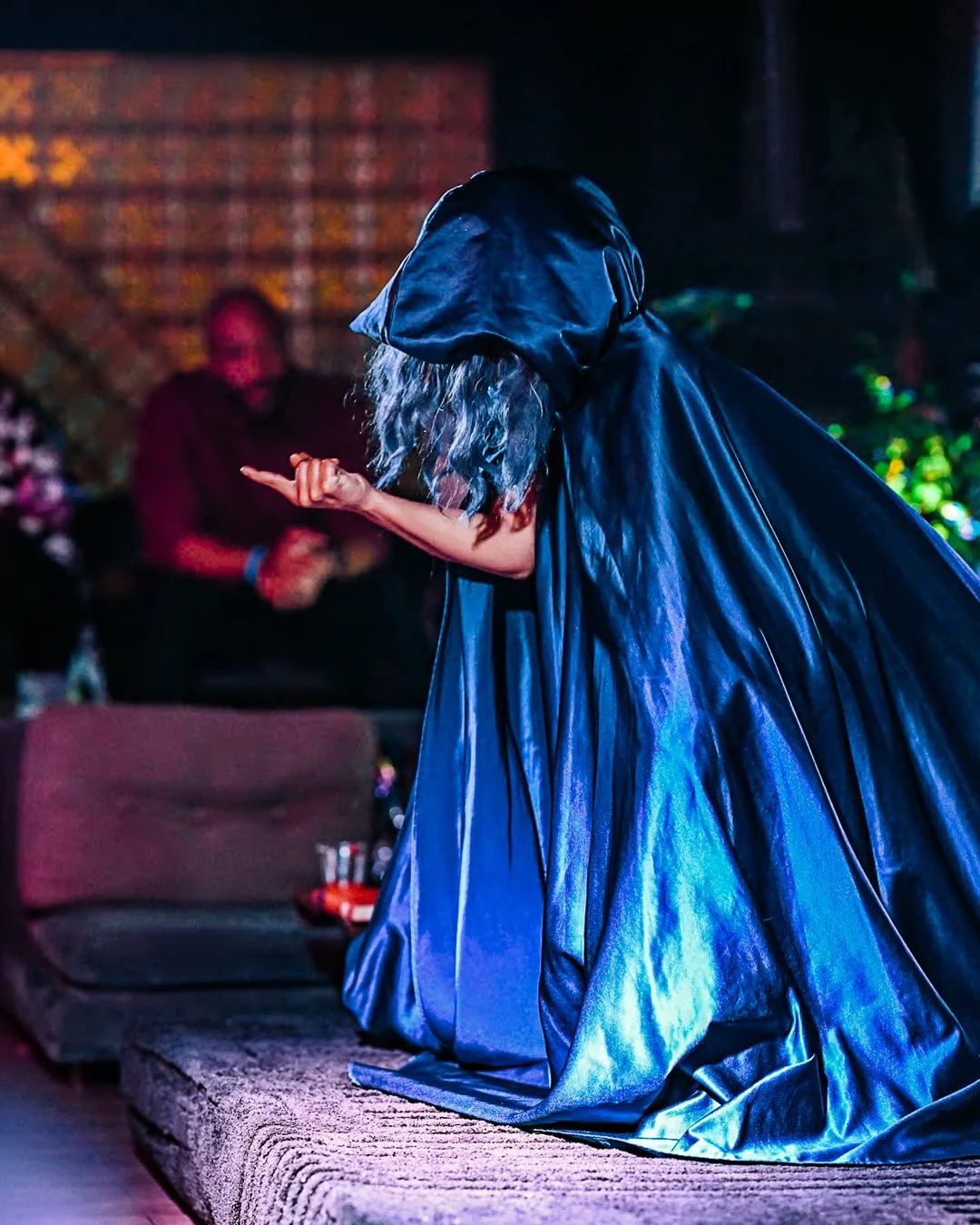
Photography Credit: Citizen Rob of Shay Au Lait at YUMMY by Siren Pack
I am a burlesque artist. And I build containers.
Through my burlesque directory, I created a living archive designed to make BIPOC burlesque ecosystems legible. Not glamorous. Foundational.
Through this directory, I spotlight brands and productions actively shaping the culture, including:
If people cannot find us, we do not exist to researchers, journalists, or institutions tracing lineage.
This is also why I deeply respect another preservation project, “the Black Burlesque Directory, created by Po Chop. It’s one of the few centralized online archives dedicated to Black burlesque artists.
But it raises an uncomfortable question: What happens to the Black Burlesque Directory 25 years after Po Chop dies? What happens to my website and every other one of ours even 5 years after we die? What happens to 21st Century Burlesque in 30 years?
What is the succession plan?
Where is the Black Burlesque library?
Where are the permanent exhibits - online and in person?
How many books have been written by Black burlesque artists?
Where is the consistent burlesque news platform - especially one that centers Black voices?
When I say “artist,” I’m not limiting that to a dancer. Burlesque photographers, comedians, DJs, producers, poets - we are all part of the ecosystem. And yet, who else is actively preserving this culture and story outside the comfort of their own circles and industry friends?
Naming is preservation.
Each of these projects represents more than a show; they are hubs of community, experimentation, and survival. Naming them publicly is an act of preservation. It signals that this work matters, that these platforms are part of the cultural record, and that Black burlesque is not isolated acts, but a network of artists, producers, venues, and organizers building something collectively, often without institutional backing. Preservation begins with visibility, and visibility begins with naming.
Through SpeakEasy Noir, I treat education as infrastructure. I translated lived experience into curriculum - teacher training, syllabi, lesson planning - because education is how preservation scales. If burlesque is not treated as knowledge, it remains aesthetic. This means teaching artists how to document their work, articulate their methodologies, and pass information forward intentionally. Education is how preservation becomes scalable.
Through Siren Pack, I produced work with intention. The Black Burlesque Trilogy (PRIMAL, FREEDOM, SUBVERSION) is structured, ceremonial, and cyclical. The trilogy is ritual, storytelling, burlesque, pole, kink, and theater - an Erotic Temple built to imagine Black futures, to be here now with Black presence, and to celebrate the stories of our Black pasts. And this is but one of our many signature show series. It is preservation through continuity. Through repetition. Through vision.
Beyond our signature series, we also use our residencies, privilege and access to also spotlight, platform or fully support the take over of other production companies within our network and stages. When Siren Pack co-produced the Philadelphia premiere of We Been Here: Black Burlesque Legacy by Queerly Femmetastic under the mentorship of Perle Noire, it was not nostalgia. It was intervention. The project pays tribute to Black burlesque legends through TedX-style storytelling paired with performance.
Perle Noire is not an ancestor. She is here. Teaching. Shaping the future. She is one of our living legends. And Queerly…. Queen Queerly Femmetastic is one of the most decorated, titled Burlesque Performers to date.
Give legends their flowers while they are alive enough to receive them.
I do not build because it is trendy.
I build because without structure, culture drifts.
Everybody wants to be a showgirl, but tell me, when was the last time you booked the services, classes, performances, Showgirl excellence, and more from Perle Noire, Aquarius Moon, Queerly Femmetastic, and me, Shay Au Lait?
Aquarius Moon, Shared Vision, and Intentional Lineage
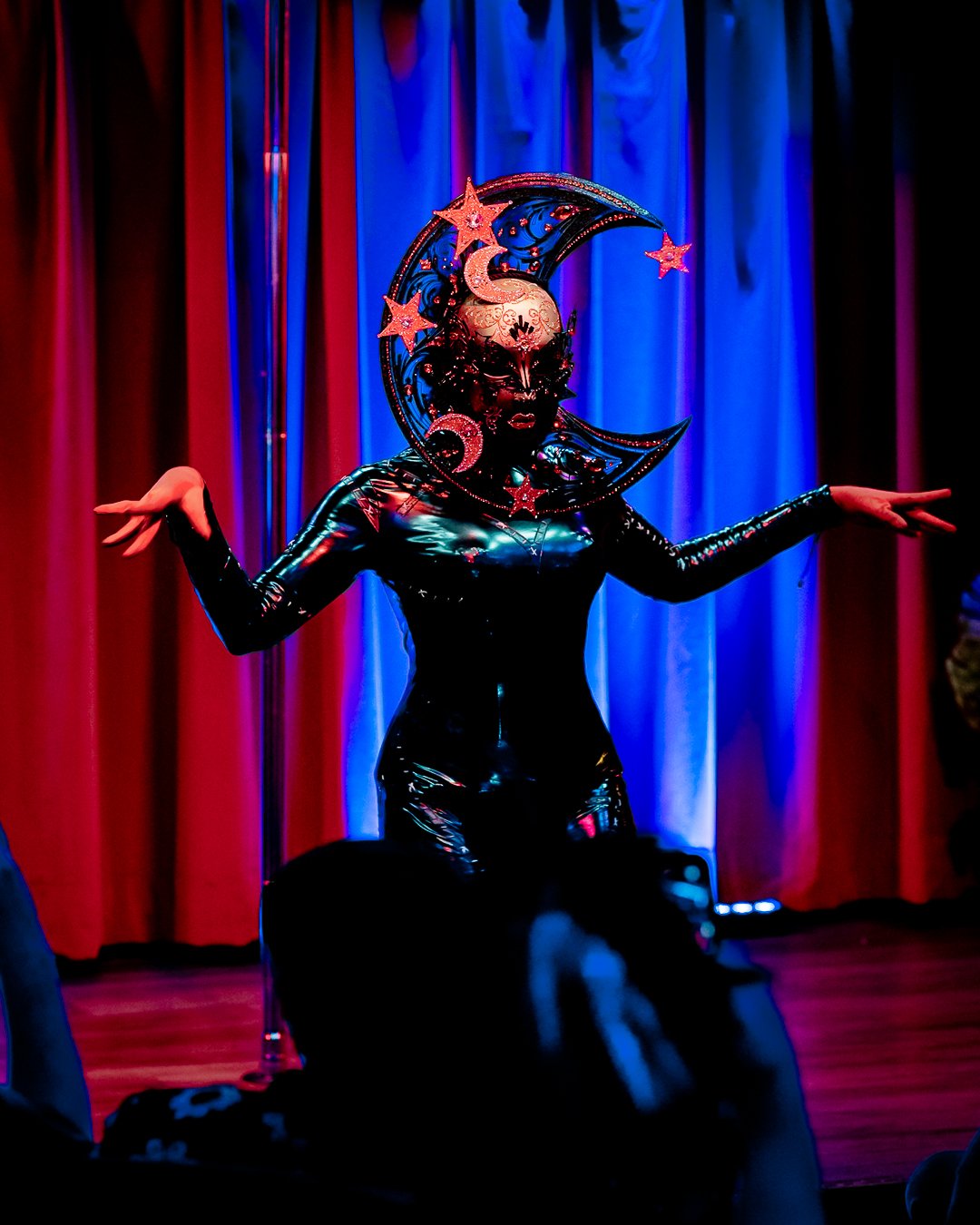
Photography Credit: Citizen Rob of Aquarius Moon at interPOLE by Siren Pack
Speaking of Aquarius Moon, my relationship with Aquarius Moon is rooted in trust, intention, and long-term thinking. I don’t recall when we first connected, but I remember it was aligned, powerful, and I instantly knew back then she was part of the history and future of burlesque. From the beginning, our conversations were about industry structure, sustainability, and how to build intentional business collectives within nightlife and performance.
I don’t know if she initiated the conversation or if it was me, but eventually I booked her to perform for my production company, Siren Pack, in Philadelphia for several shows. When she hit the stage, I was blown away. What I did not realize about our connection, though, is that according to Aquarius, I was the first producer to book her in the city of Philly. Many performers say this of me. Recently, Queerly Femmetastic told me that I’ve been the ONLY producer to book her in Baltimore since 2020. How is that possible?
Over the years, I’ve watched Aquarius expand into multiple roles - performer, producer, cultural architect - launching brands and now stewarding a production company that reflects her values & vision while spearheading what I consider a monumental and pivotal moment in Burlesque History, with her exhibition.
I’m deeply proud of her accomplishments - not simply for the visibility she’s gained, but for how she’s gained it. With care. With clarity. With accountability to Black burlesque as living culture.
Every(body) Wants to Be a Showgirl feels like a natural extension of those years of dialogue that she’s been having with so many of us. It’s a shared belief that our stories deserve structure, context, and preservation while we are still here to guide how they’re told.
Why This Exhibition Matters
Every(body) Wants to Be a Showgirl is an exhibition featuring over 100 Black burlesque performers.
Artifacts. Props. Costumes. Film. Documentation.
Public access. Museum-scale visibility.
Archival intention.
It gathers and centers living Black burlesque artists into a structured, documented, multi-week institutional space while honoring lineage. It invites audiences who may never attend a late-night burlesque show but will attend an exhibition.
If this exhibition had not happened, this collective gathering of burlesque stories would not exist in this form. Nothing of this scale has been done before. (If it has been done before, please do correct me. I do not know everything, and I’m willing to learn.) This exhibition is a structural rupture in burlesque history.
This is happening in Washington, DC, during a political climate where art is being weaponized, education is contested, and Black erotic expression is still treated as disposable.
It creates visibility and context in a moment when our freedoms - culturally, politically, and economically are not guaranteed.
This is not decorative.
It is daring.
It is revolutionary.
Specifically, when I first spoke with Aquarius Moon about it, I said it was “ambitious, audacious, and necessary.”
And it is being shaped by a living artist who understands both art and business, vision and execution. It matters that she is alive and guiding how this story is told.
Because preservation without authorship is just another form of extraction.
Parts of The Future I See
Twenty years from now, I see:
An abundance of burlesque documentaries and films.
University minors bridging theater, dance, and performance art, specifically naming burlesque.
Burlesque intersecting with political theater.
Extended-run productions lasting months, not one-night-only and double-features.
Strategic touring circuits.
Grant-funded companies.
Institutional partnerships.
But that future does not appear because we desire it. It appears because we document, structure, and insist.
The Alignment
I participate in this exhibition as:
Exhibiting Artist
Liason Team: Marketing & Communications Strategist
Community Partner: As Founder of Siren Pack
Not because I want proximity to visibility. But because I believe in building a record while we are still here to shape it.
Everybody wants to be a showgirl.
But preservation?
Credit?
Infrastructure?
Economic sustainability?
That takes work.
And this exhibition is doing that work - right now.
About The Writer: Shay Au Lait is a burlesque artist, cultural architect, and founder of Siren Pack & SpeakEasy Noir. For over two decades, Shay has built performance platforms, educational programs, and archival initiatives centering Black burlesque lineage and infrastructure. Through production, curriculum design, and strategic cultural partnerships, Shay treats preservation as both practice and policy. Shay’s work focuses on ensuring that Black burlesque is not only seen, but documented, credited, and sustained.